
EGYPT RIDE – NUGGETS FROM VARIOUS RUINS
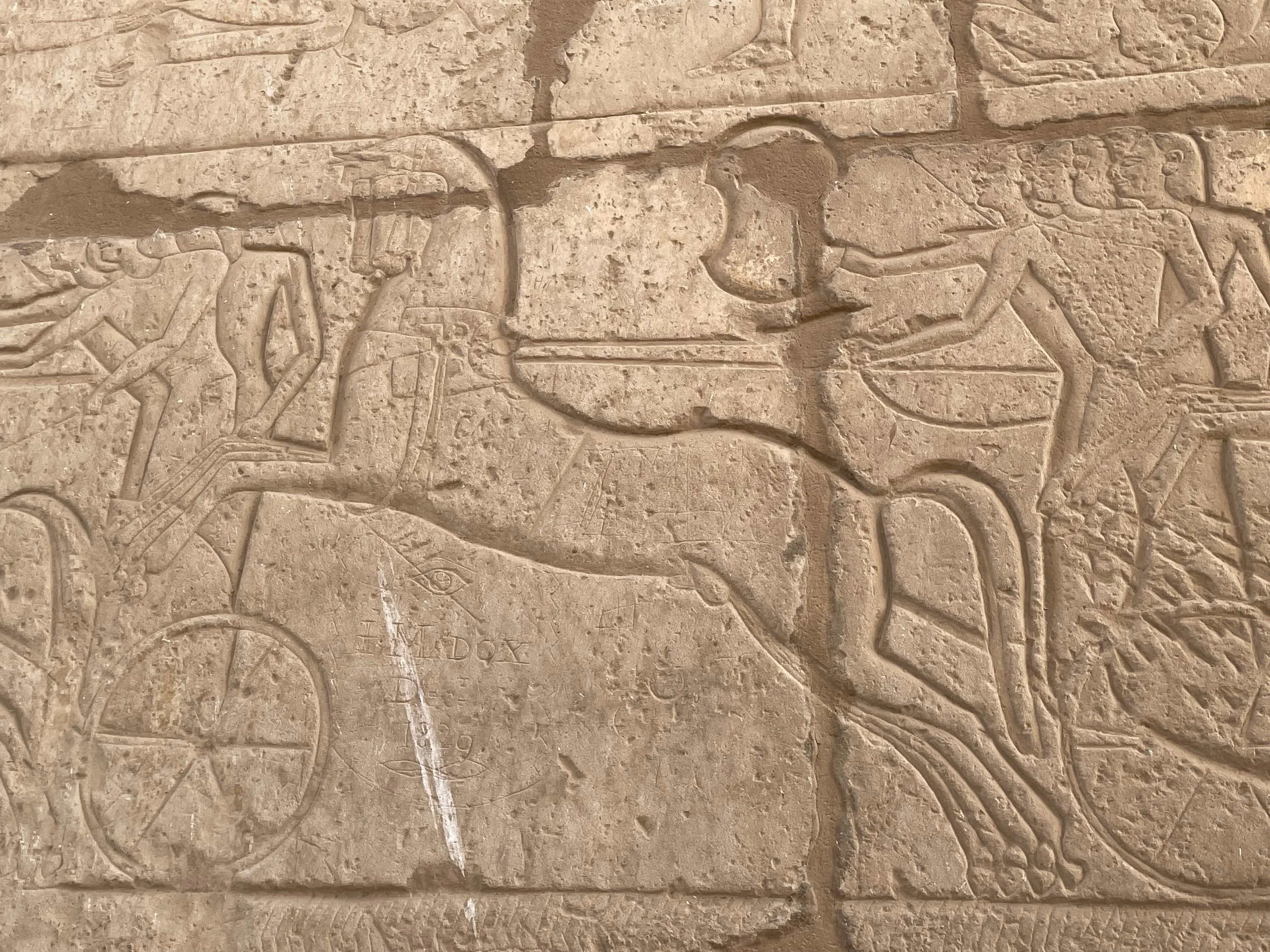
Animals in Iconography
This is a horseback riding trip that happens to involve seeing some of the world’s historic treasures. Of course, I’ve been looking for horses in the iconography and images that cover the temples, palaces, and tombs we’ve explored. Animals clearly played an important role in the religion of Ancient Egyptian – Anubis, the god of embalming is a jackal; Bastet, the goddess of pleasure and good health, is depicted as a sleek cat; and baboons are the messengers of the gods, alerting us to their approach. Animals also play official roles – a bee/wasp always proceeds the cartouche that gives a kings coronation name and ducks feature regularly in those names. As the picture above attests, horse images can be found. But they seem limited to a martial context. I wondered why an animal so clearly valued by modern Egyptians plays only a secondary role in the art of the ancient civilization. I didn’t get a clear answer, so I followed the advice of one of the guides and asked ‘Mr. Google.’ Apparently, the Hyksos, who came from the Levant in around 1600 BC, brought the first horses to Egypt. Now, that sounds very long ago, but that’s the New Kingdom and in Egyptian terms, a few months ago. So, though Modern Egyptians probably hold horses in higher esteem than ducks and jackals, our lovely equine companions didn’t come along in time to be integrated into the religious beliefs that defined so much of Ancient Egyptian life. Too bad, I myself feel a truly nice canter is like receiving a sacrament without having to listen to a sermon.
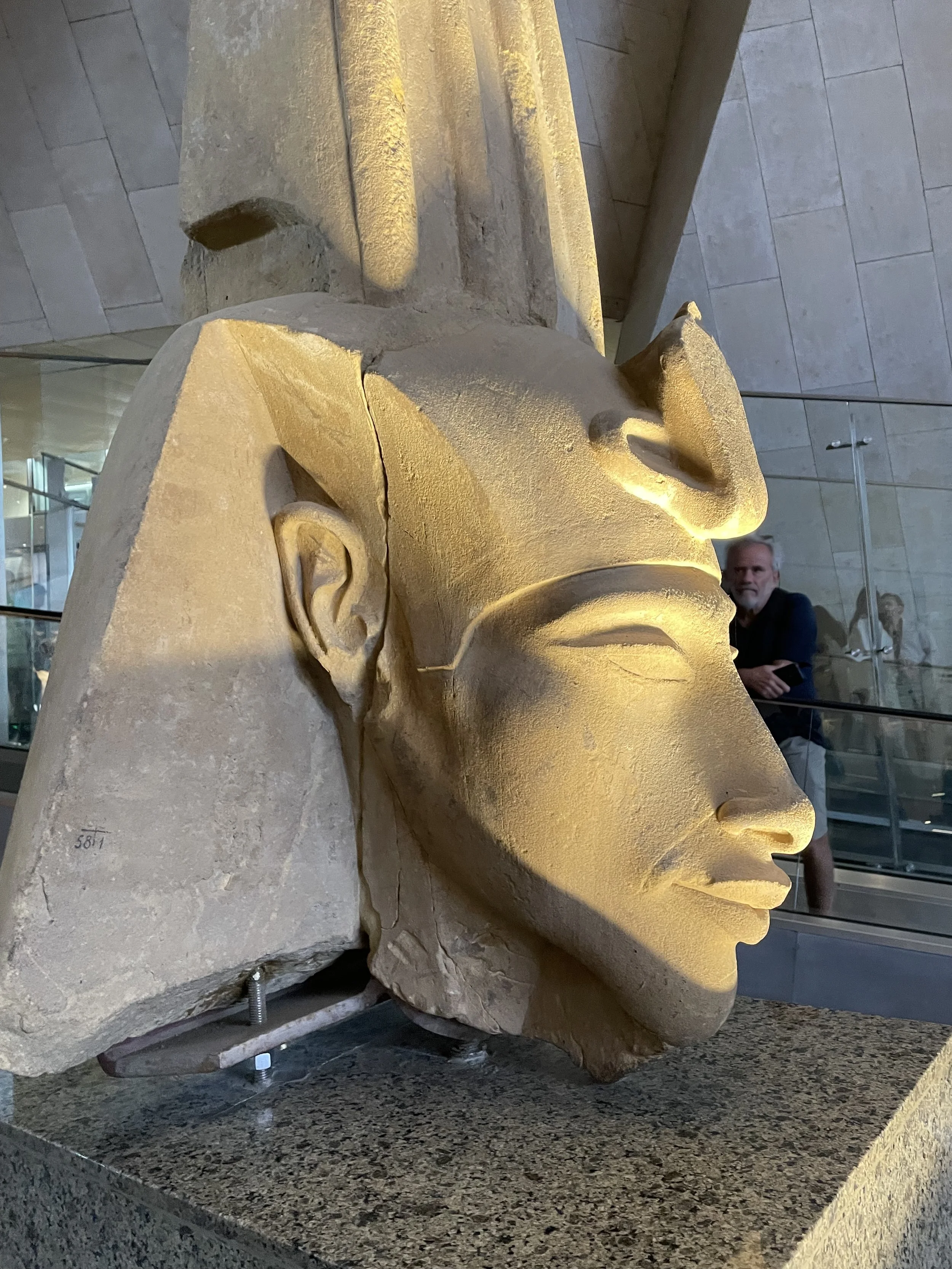
My Favorite Egyptian King
Ancient Egyptians did an amazing job or recording their histories. As a result, we have a pretty clear sense for the succession of kings though these baton passes happened thousands of years ago. At some point, however, some detail-oriented archeologist (is there any other kind?) found a gap and started looking for an explanation. Who they found is now my favorite Egyptian king, Akhenaten. I first noticed Akhenaten in the Grand Egyptian Museum when the moving walkway ride through the Hall of Kings suddenly showed a bust of man that didn’t have the pat look of the others. “Who’s that?” I asked and was promptly told by my guide not to get ahead of myself. We had thousands of years to cover before we discussed that guy. When we did turn to Akhenaten, it was a pretty quick lesson because there isn’t much known about him, but what we know is extraordinary. Akhenaten ruled in the mid-14th century BCE and, after he died, the priests did a fine job of making sure he was forgotten; hence the gap in knowledge. Why? Because the dude had some radical beliefs. First – one God, not the multitude. Second – that one God isn’t the sun; the sun is just a handy symbol of the power of God. Third – pharaohs/kings are just people like everyone else and should be depicted as such. Hello, modern thinking. Oh sorry, Akhenaten. I meant bye-bye. We aren’t ready for you.
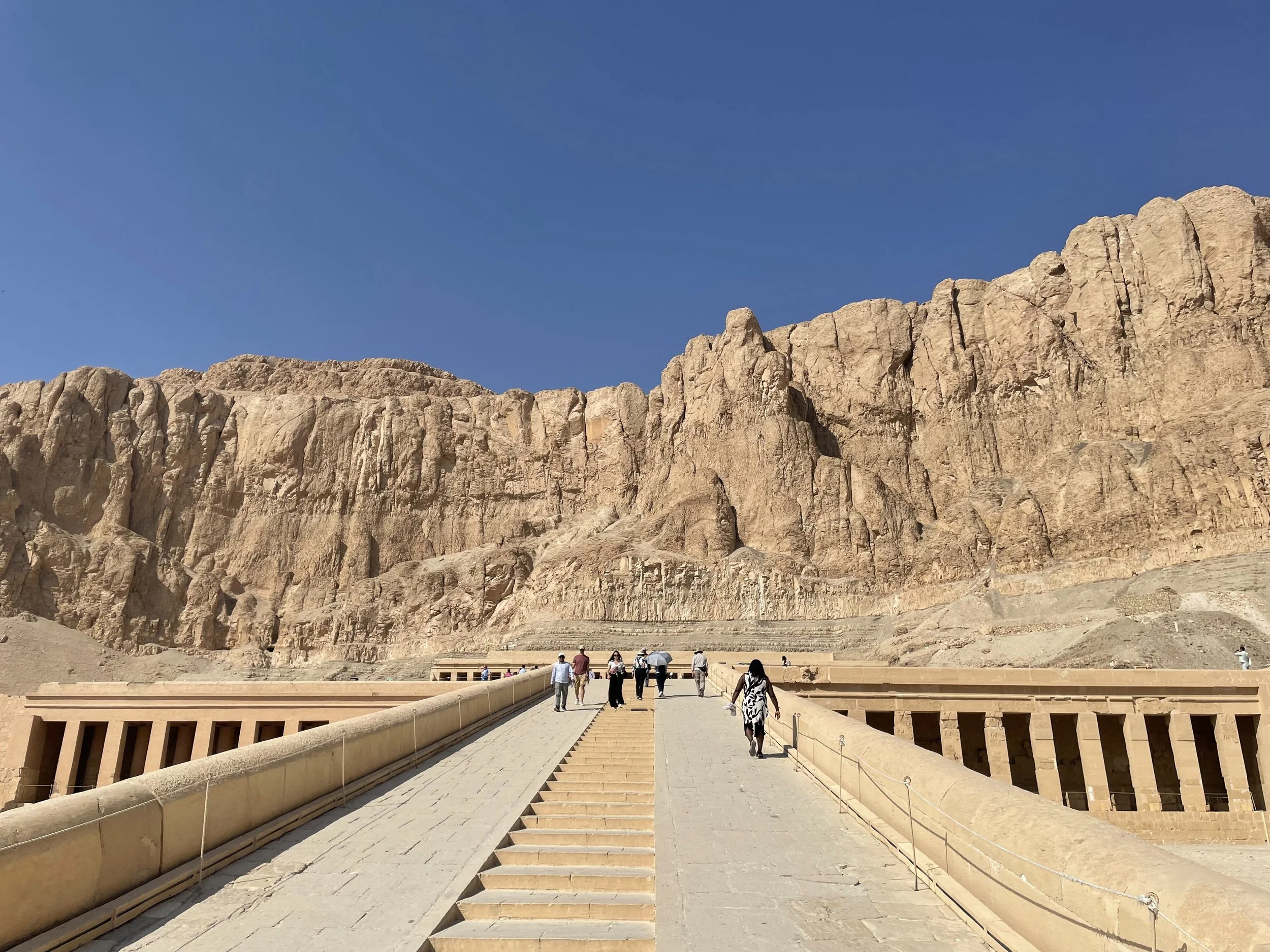
Bitches Get Stuff Done
We can’t seem to get a female president elected in the US. Maybe the next woman with those aspiration should take some lessons from Hatshepsut, who was a powerful pharaoh of Egypt’s 18th Dynasty. Thing is, though Hatshepsut had 100% royal blood, had worked closely with the last king, and was next in line, she also unfortunately had a vagina. So, instead of letting her rule, they made her marry her half-brother to improve his royalty quotient and then they made him. But oops, he died. Hatshepsut’s turn, right? Daughter of one king, wife of another; key advisor to both; knows the biz. Nope, they go with her stepson. But shockingly, as a child, he’s not ready for the job. What to do? So, Hatshepsut convinces everyone to let her be regent for a while. Then, when her stepson comes of age, she convinces the priests (via the offer of a swank new temple that will bring in lots of offerings from the people), to let her continue. The priests kind of dig the deal; so, they make sure the kid gets an extra long stay at boarding school. Seems like everyone does well and her reign was known for exceptional prosperity and the establishment of significant new trade.