EGYPT RIDE – DAYS 2&3 -- GEM and LUXOR TEMPLES OF ASSORTED RAMSES
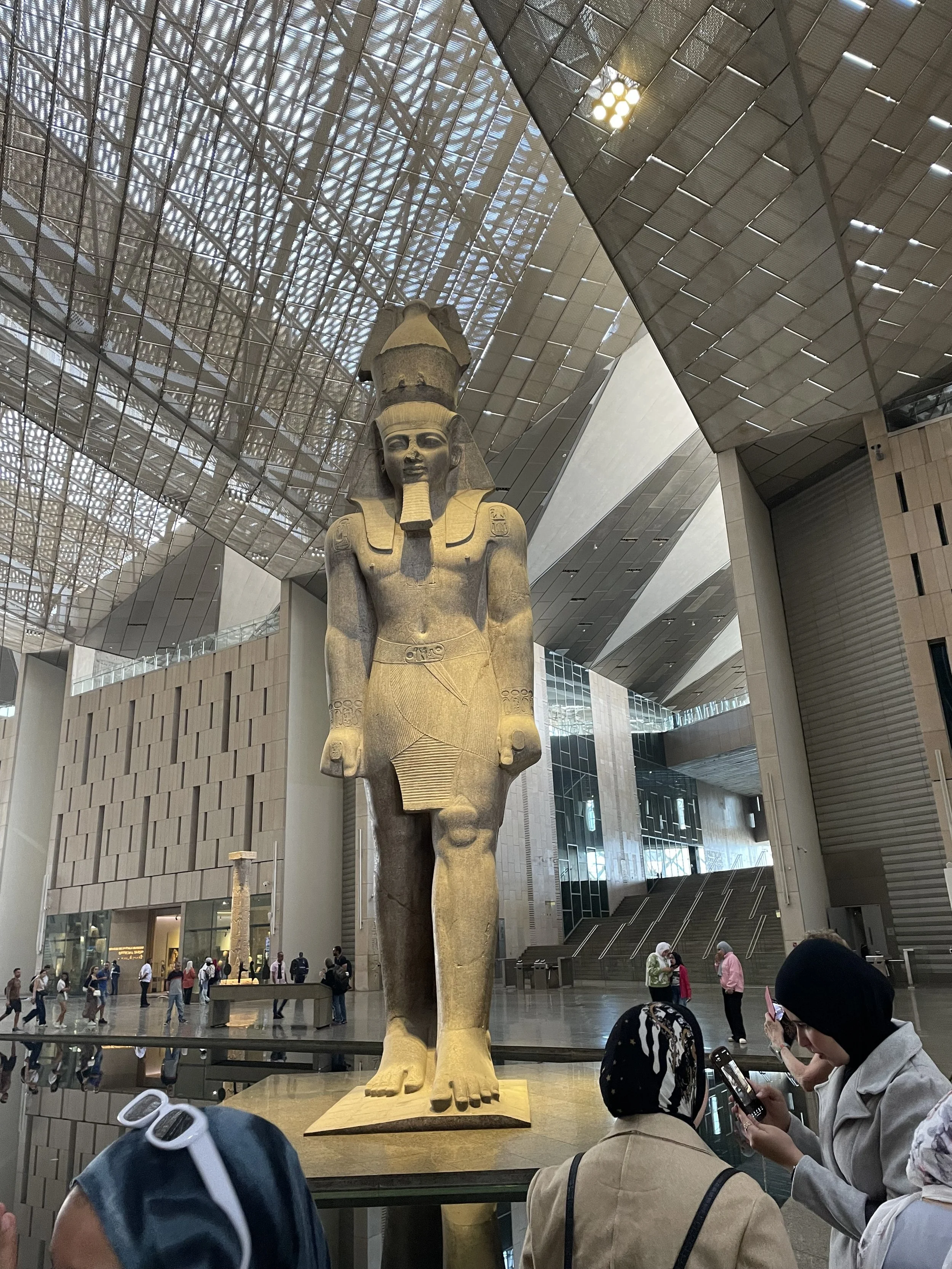
Most of our second day in Giza was spent not in the saddle but walking the galleries of the immense, brand-new Great Egyptian Museum. Seeing the golden, bejeweled treasures of King Tutankhamen’s tomb and the massive statues of various kings and gods set amidst the sparkling glass, glowing alabaster, and polished woods of this beautiful building, you get a sense for the power and wealth that must have surrounded the elites of this amazing civilization that continuously flourished for thousands of years. But what of the common ancient Egyptian? The sandal maker, the date farmer, the fabric weaver – none of these were welcomed into the most ornate parts of the temples nor did they participate in the rituals of a king’s entombment. They may have contributed the labor and military might that made all this grandeur possible, but I don’t think the daily lives of common ancient Egyptians were much enriched by the accumulation of treasures for a king’s tomb or the creation of a 100-foot statue of Osiris.
Well, karma is a bitch, Ramses I - IX. Today, common Egyptians live very much amidst this splendor. In fact, in Luxor until about a decade ago, a number of homes backed into ancient tombs to take advantage of the excellent geothermal cooling. And still today, Luxor’s residents walk, drive, and let their animals wander around the ruins of the largest temples built by the most powerful kings of the ancient world.
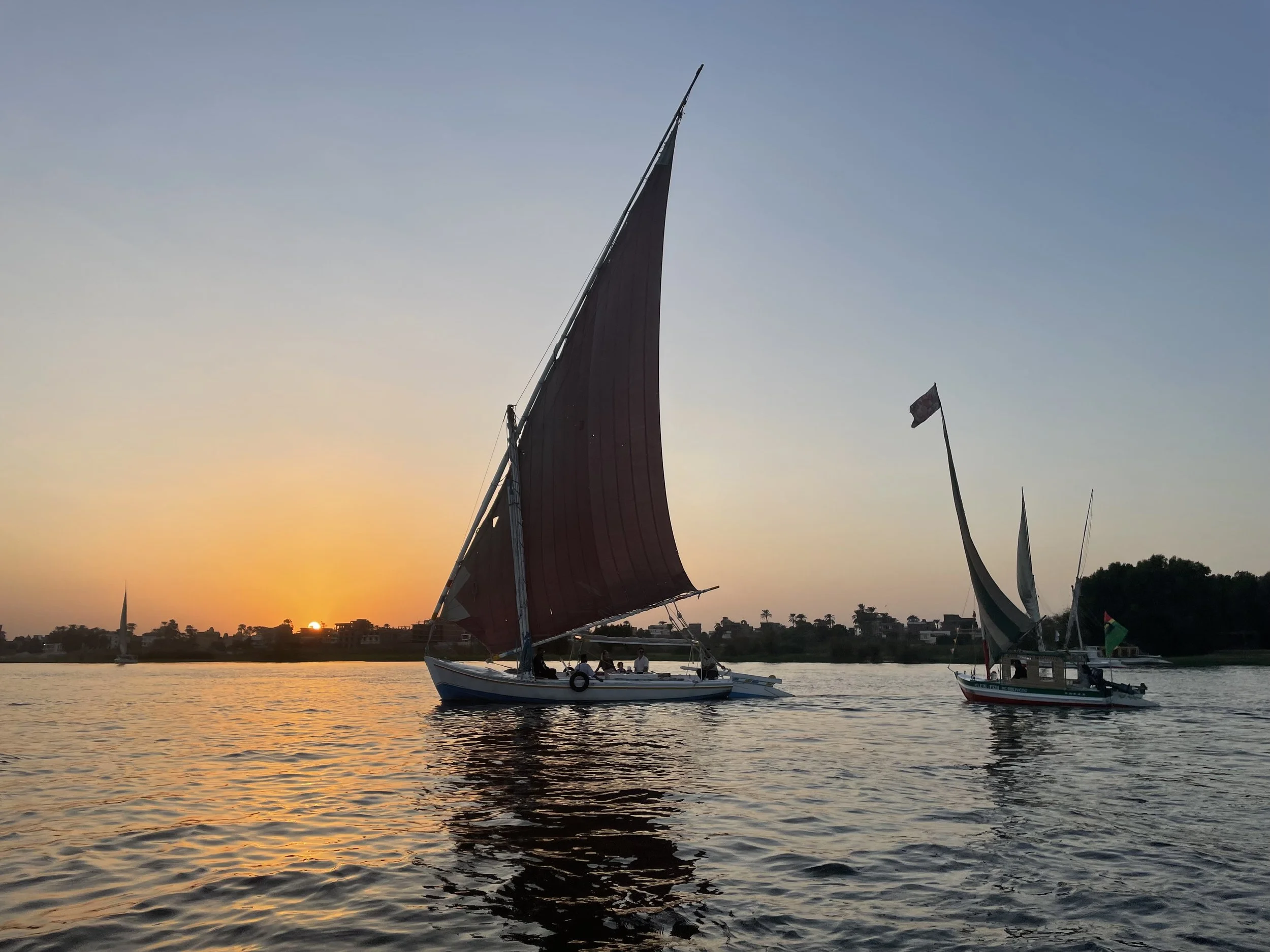
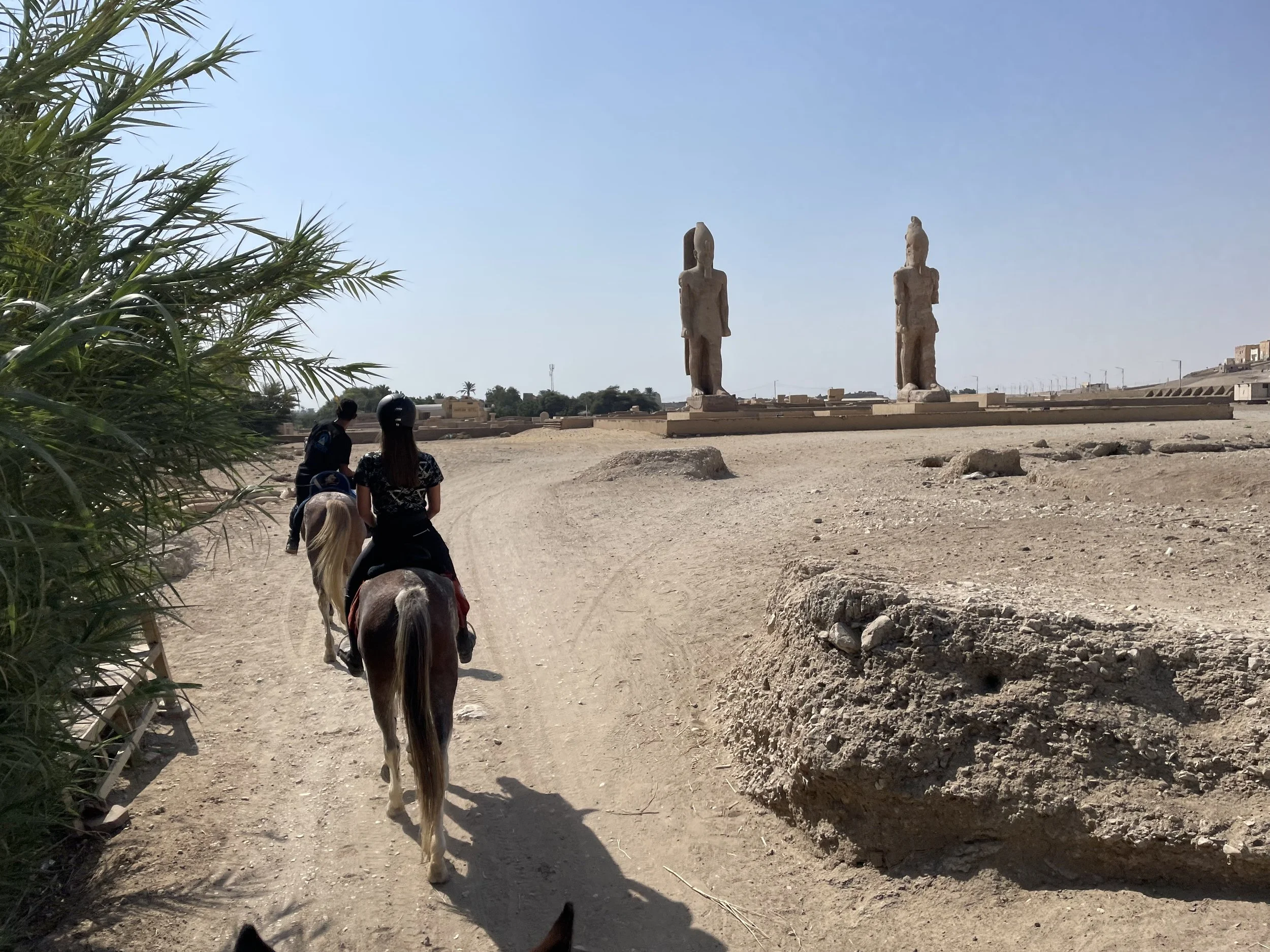
In the dark of late evening on Day, our mini-bus travelled through the streets of Luxor. Dim bulbs lit little cafes where men sat drinking tea separated by only short walls from ancient ruins. A brisk morning ride on Day 3 had us emerge from the dusty side streets and lush fields of sugar cane and banana on to an open square with two massive statues of (I believe) King Ramses II. And, it seemed very fitting that we closed Day 3 floating down the Nile as the sun set behind the mountains of the west bank much as he royal and priestly barges did in the paintings on their temple walls.
Every Egyptian I have met on this trip fondly claims descent from the family of his or her preferred king. Perhaps, all this living literally commoner-shoulder-to-king-statue-toe offers modern Egyptians an opportunity to feel a kinship to their most prestigious ancestors denied to their common forebearers.