
BULGARIA RIDE – A SHOT OF WHISKEY MAKES EVERYTHING BETTER
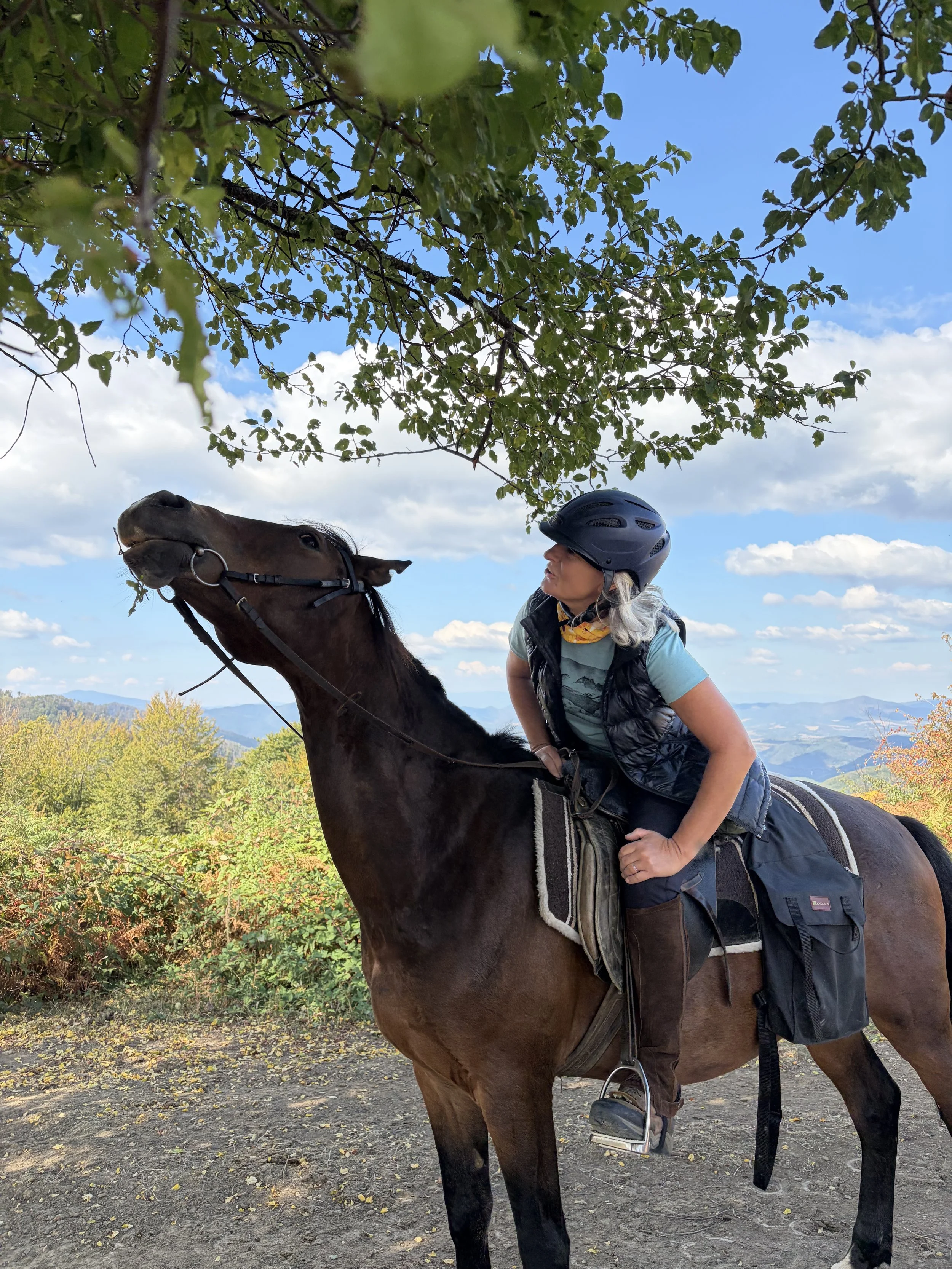
Whiskey -notched ear and all — snacking on beech leaves.
Day two dawned cool but sunny and, regardless of the previous day’s upsets, all seemed ready to try to enjoy. Taking our guide aside, I insisted she find me a different mount. Lisko, the horse I’d been given, had barely managed the three-hour outing to the monastery and would surely fail on the seven-hour trek ahead of us. She argued that only Sophie’s horse was similarly small enough to work with the English saddle. I’d discussed this possibility with Sophie the night before and she quickly jumped to my support and agreed to allow me to try her mount if they could let her ride the only other free horse, a larger gelding named Arab. In fact, Sophie had found riding her first mount problematic. Though she assessed him to have a good character and a lively walk, she felt the bulky western saddle and oversized bridle they’d put on him made him unresponsive and his trot difficult to sit or post. She’d been drawn to Arab the first day but had been told he was only used by our mountain guide, Marion, who’d be with us for the rest of the trip. Marion quickly agreed to ride a pack horse and give Arab to Sophie, so I could try Sophie’s horse from the day before while Lisko need only carry an empty pack frame. Saddles were switched; everyone mounted up; and, I got my first shot of Whiskey.
Sophie had been correct, the little bay gelding had a fast walk and carried his handsome - if bur-tangled – head nicely. This head was, however, our first topic of conversation. His ears had been cut into some mark of ownership making him highly agitated by any contact beyond the mid-point of his neck. As we walked along the rocky trail (behind the Czech triumvirate, of course), I slowly worked to free his lower mane of brambles and knots. Stopping at the trail edge, I let Whiskey browse on the tree leaves overhead. With his neck extended and his attention focused on snacking, I gently rubbed and scratched his neck then dropped my hand and caught him up to the rest of the riders when he tensed. We did this several times and, by the end of an hour, I had all but his forelock clear of snarls and was able to lightly caress his mangled ears.
Having noted small sores at the corners of his mouth from an ill-fitting bit, I was loathe to overly rely on the reins to direct him. This brought us to our next lesson -- leg aids; he knew none. Opening the right rein, I tapped his side with my left heel and let him step away from the contact. We repeated this on the other side. And then again, and again, and again reinforced with pieces from my powerbar as a reward. Soon, Whiskey was responding to leg pressure paired with the lightest tightening of a rein.
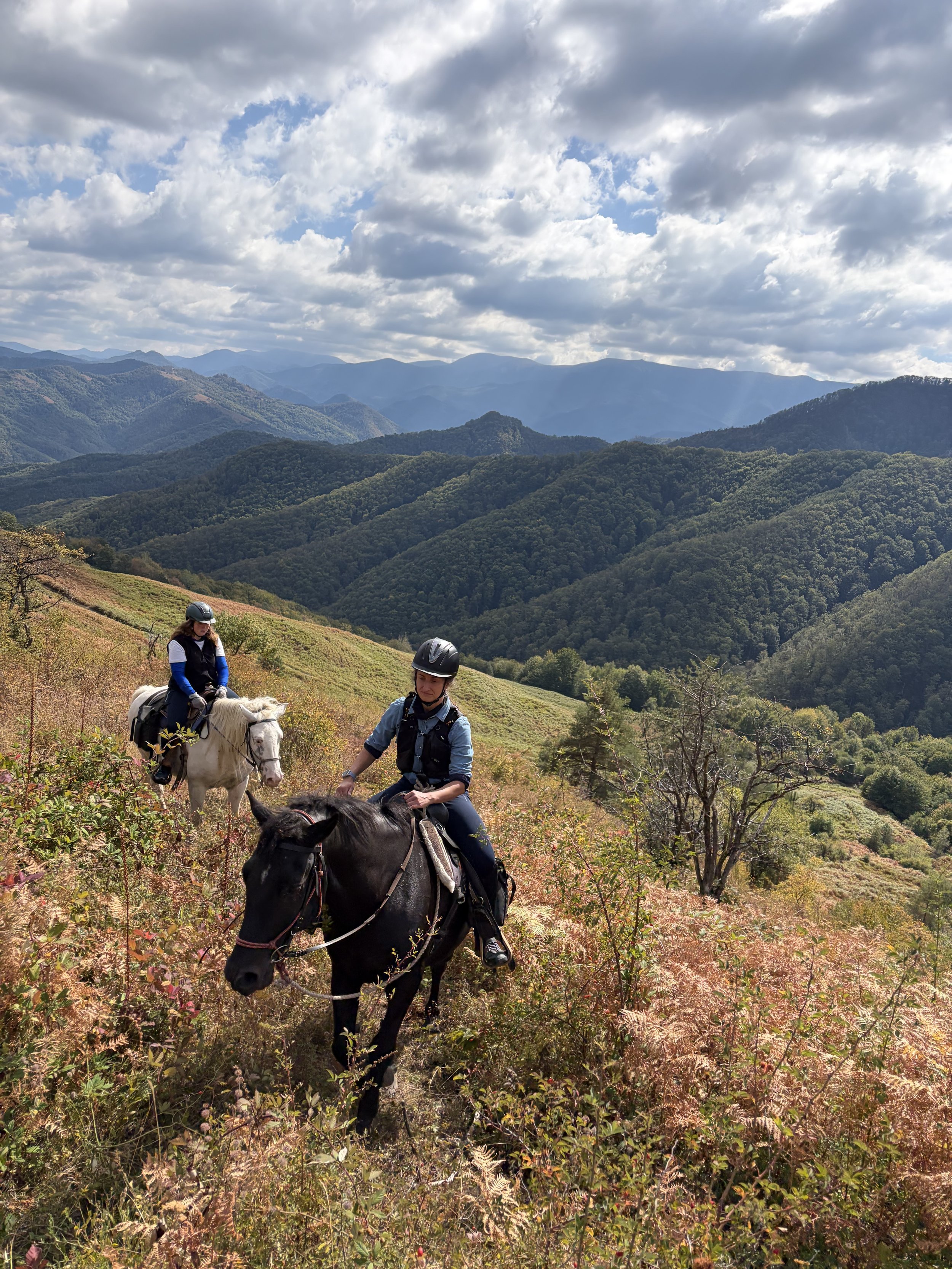
Focused in this way on giving Whiskey rudimentary training, I’d failed to notice the landscape through which we’d passed. Reaching the top of a long climb, we stepped from among the trees and were greeted by a wide expanse of forested slopes topped by rusty bracken. Now up on the extensive network of ridges, we were able to occasionally trot and even canter and I came to realize that Whiskey’s only problem at these gaits was that, though smaller, his stride was huge making him faster than the other horses. Always held to the end of the line, he was forced to mince and jig. How misjudged this little horse had been.
I later learned that Lisko – the first horse I’d been assigned – was largely reserved for children, non-riders, old people, and imbeciles. Apparently, I too had been misjudged, making Whiskey and I a perfect pair.
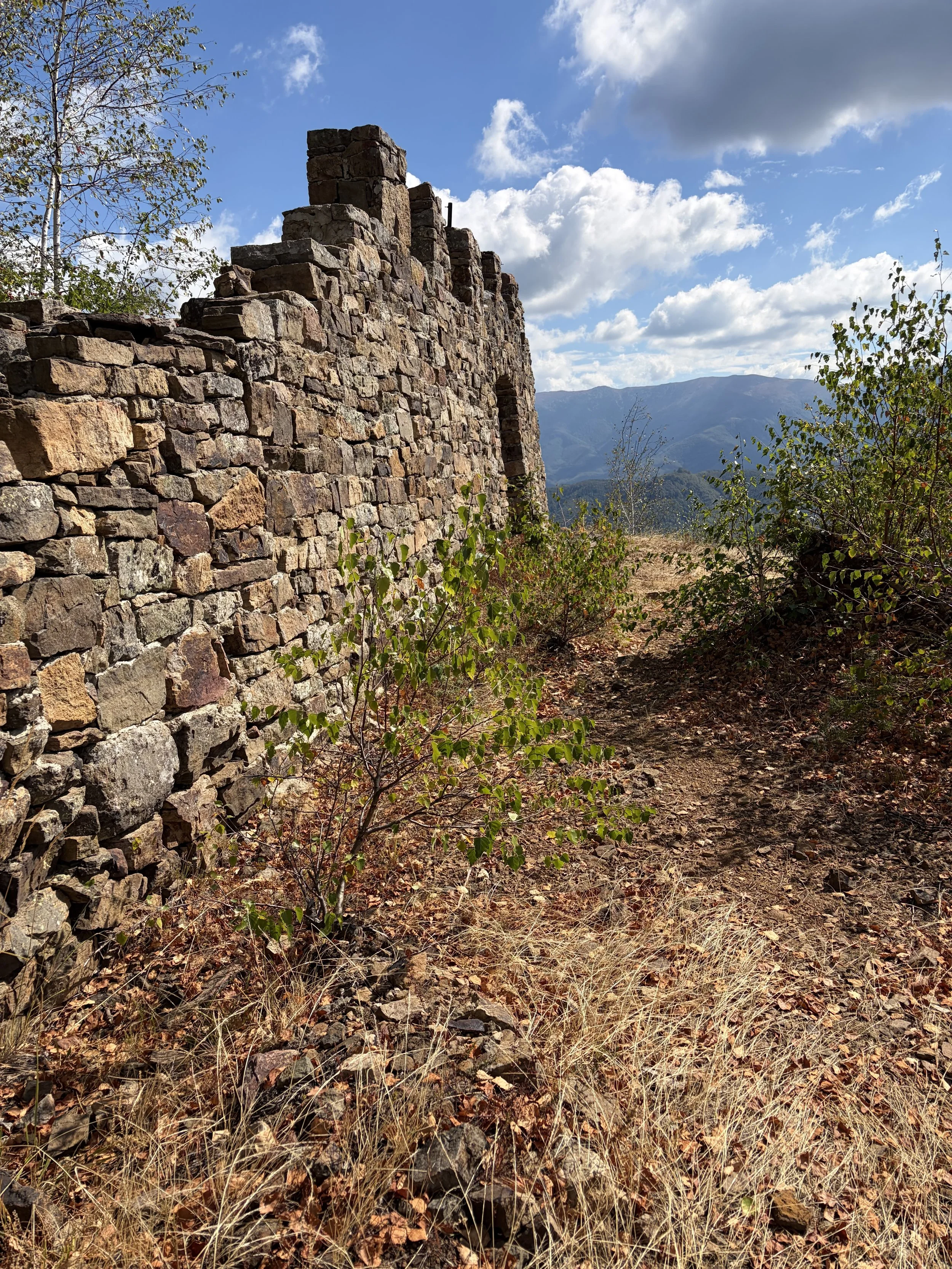
Reconstructed Thracian fort that was used for years to hold off the Romans.